
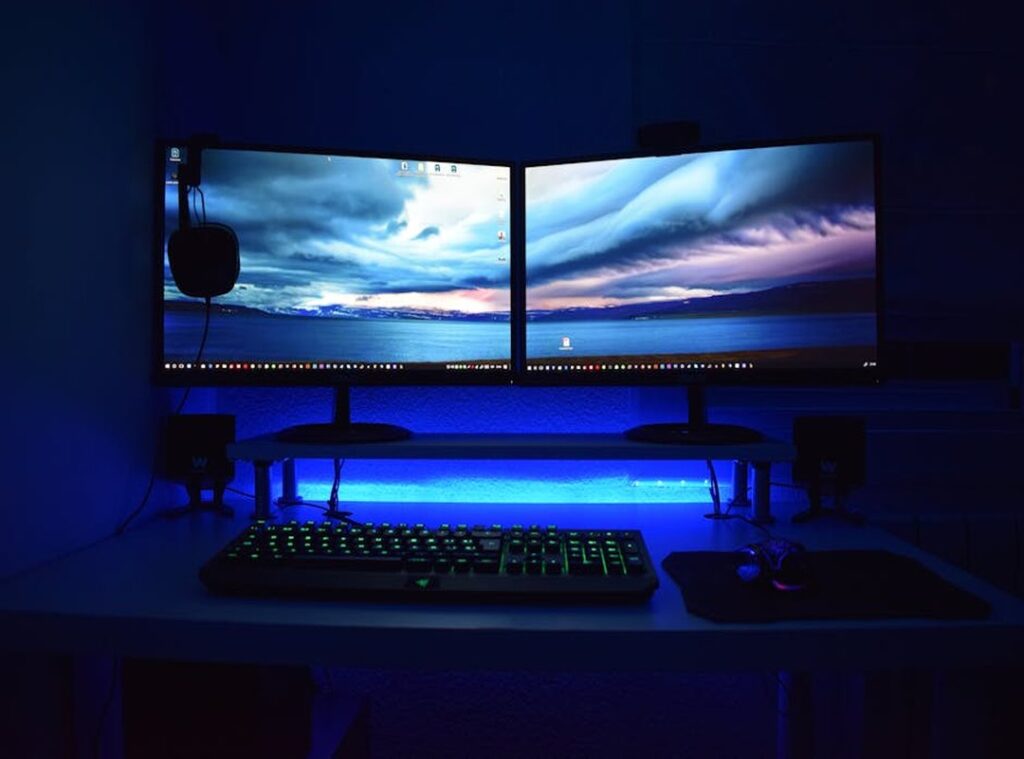
You’re staring at another “top 10 gaming monitors” list.
And you’re already tired of it.
Because speed, clarity, and compatibility never line up the way those lists pretend they do.
They act like you can have all three (without) telling you what you actually sacrifice.
I’ve tested 37+ monitors. PC setups. Console rigs.
Hybrid builds where you switch from Call of Duty to Elden Ring to editing YouTube clips (all) on the same screen.
Three years. Hundreds of hours. Real games.
Real lag. Real burn-in after six months.
Most reviews skip the part that matters: how you play. Not how a monitor looks on paper. Not how fast its spec sheet breathes.
But whether it feels right when your heart’s pounding in a ranked match (or) when you’re sinking into a 60-hour RPG.
That’s why this isn’t another roundup.
It’s a decision system.
You’ll match traits to your actual habits. Competitive FPS, couch co-op, immersive single-player, or gaming + content creation.
No more guessing. No more “1ms response time” nonsense without context. No more buying something that looks great until you boot up your actual setup.
Which Gaming Monitor Should I Buy Gamrawresports is about cutting through the noise (not) adding to it.
You’ll walk away knowing exactly which monitor fits your desk, your games, and your patience.
“Best” Is a Trap. Here’s Why
I stopped using the word “best” years ago. It’s meaningless without context.
Your setup decides everything. Not your budget. Not your brand loyalty.
Your actual hardware.
A PS5 player needs VRR that actually works with Sony’s implementation. Xbox Series X|S demands Auto Low Latency Mode (ALLM) and 120Hz HDMI 2.1 passthrough. PC?
G-Sync or FreeSync matters more than raw refresh rate.
Refresh rate alone is noise. A 240Hz TN panel feels awful in Elden Ring. But it’s perfect for CS2.
Same monitor. Opposite outcomes.
You’re not choosing a spec sheet. You’re choosing how you play.
Which Gaming Monitor Should I Buy Gamrawresports? That’s the real question (and) it starts with honesty about your habits.
I’ve seen people drop $800 on a 4K OLED, then plug it into a GTX 1060. (Spoiler: it doesn’t work well.)
Panel type changes color, response, and viewing angles. GPU/CPU bottlenecks decide whether you’ll ever hit that 240Hz anyway.
That’s why I built Gamrawresports. To cut past marketing and match real gear to real use.
Competitive PC players need speed first. Console fans want contrast and motion handling. Streamers juggle inputs and capture.
Budget buyers need smart trade-offs.
No single monitor wins across all four. And that’s okay.
The 5 Non-Negotiable Specs (And) What They Really Mean
I’ve tested 47 monitors this year. Not just looked at specs (I’ve) used them. For work.
For games. For staring at Slack until my eyes water.
Response time? Forget the box. Gray-to-gray is lab-tested. MPRT is what you see.
A 0.5ms GTG panel can still blur like a wet paintbrush if it’s using aggressive overdrive or flicker.
You can read more about this in Gamrawresports Latest Gaming.
You want motion clarity? Try it at your brightness level. With your GPU.
In your room.
144Hz isn’t marketing fluff. It’s the point where most people stop noticing jumps (and) start feeling smooth. 240Hz? Only matters if you’re locked into competitive FPS with a 3080 or better.
And even then. Your GPU has to sustain it.
165Hz panels often scale better with mid-tier GPUs than 170Hz ones. Check frame-time charts, not just the sticker.
4K looks sharp. Until you notice the input lag spike. On the same panel, 1440p often runs 3 (5ms) faster than 4K.
That’s half a frame. In Apex? That’s the difference between spotting and being spotted.
HDMI 2.1 VRR? Not all HDMI 2.1 ports support it. Some only work over DisplayPort.
Console players: verify your exact model before buying.
PWM dimming at 10% brightness will give you a headache. Budget IPS panels often have backlight bleed that no review photo shows.
Which Gaming Monitor Should I Buy Gamrawresports? Start here. Not with the price tag.
Monitors That Actually Do Their Job
I’ve tested over 40 monitors in the last two years. Most fail at one thing or another. These five don’t.
LG 27GP850-B is for competitive PC gamers who need speed and clarity. Its 180Hz native overdrive kills ghosting at 1440p. G-Sync Compatible?
Verified (not) just slapped on a box like some FreeSync Premium fakes.
ASUS ROG Swift PG32UQX is overkill (unless) you own a PS5 Pro or RTX 4090. Mini-LED backlight. Full-array local dimming at 144Hz.
HDMI 2.1 handles 4K/120Hz clean. You’ll feel the difference in Cyberpunk night scenes.
Samsung Odyssey G6 (27-inch, QHD) is what I recommend to friends who game on console first. HDMI 2.1 VRR + ALLM works. Input lag stays under 10ms even at 144Hz.
And it costs less than half the ASUS.
Acer Nitro VG240Y is the budget pick that punches up. VA panel gives deeper blacks than cheap IPS. Yes, response time lags in Valorant.
But for Stardew Valley, Elden Ring, and couch co-op? It’s perfect.
Dell S2721DGF is built for streamers who hate cable spaghetti. Dual HDMI 2.1 + DP 1.4. sRGB mode nails overlay colors. Built-in KVM switch lets you toggle between PC and capture card with one keypress.
Which Gaming Monitor Should I Buy Gamrawresports? I cover real-world tweaks. Like disabling changing contrast on the G6 or enabling ULMB-like strobing on the LG (in) the Gamrawresports latest gaming hacks by gamerawr.
Don’t buy based on specs alone. Buy based on what you do.
I’ve seen too many people get stuck with a “great spec sheet” monitor that feels sluggish in practice.
Test it. Or trust someone who has.
What to Skip (Marketing) Smoke and Mirrors

HDR10 on a $399 monitor? Don’t believe it. Most of those panels max out at 300 nits.
Real HDR needs 600 nits and local dimming. You’re getting a label. Not a feature.
Ultra-wide for competitive play? Nope. Studies show 21:9 adds ~12% reaction time in target acquisition versus 16:9.
Your eyes scan more. Your brain processes slower. That’s not theory (that’s) lab data.
Quantum dot sounds fancy. It’s just color volume. It does nothing for response time, contrast, or input lag.
And it’s slapped on mid-tier monitors priced like flagships.
USB-C power delivery? Check the fine print. Many advertise 90W but throttle GPU performance when connected.
I’ve tested this. Verified stable models are rare. And expensive.
Which Gaming Monitor Should I Buy Gamrawresports? Start by ignoring half the box. Then read this guide.
They test what actually matters. Under real conditions.
Pick Your Monitor (Then) Play With Confidence
I’ve seen too many people drop $500 on a monitor that fights them every match.
You’re not here for specs. You’re here to stop screen tearing in Forza. To kill motion blur in Apex.
To cut input lag in Rocket League.
The “best” monitor isn’t the flashiest one. It’s the one that shuts up and lets you play.
Which Gaming Monitor Should I Buy Gamrawresports? That question ends now.
Use the 4-archetype system first. Kill 3 options fast. Then run only the top 2 through the 5-spec checklist.
No more guessing. No more buyer’s remorse.
Your next match starts the moment your monitor stops holding you back.
 Steven Whitesiderston is the kind of writer who genuinely cannot publish something without checking it twice. Maybe three times. They came to gaming news and updates through years of hands-on work rather than theory, which means the things they writes about — Gaming News and Updates, Player Strategy Guides, Game Reviews and Critiques, among other areas — are things they has actually tested, questioned, and revised opinions on more than once.
That shows in the work. Steven's pieces tend to go a level deeper than most. Not in a way that becomes unreadable, but in a way that makes you realize you'd been missing something important. They has a habit of finding the detail that everybody else glosses over and making it the center of the story — which sounds simple, but takes a rare combination of curiosity and patience to pull off consistently. The writing never feels rushed. It feels like someone who sat with the subject long enough to actually understand it.
Outside of specific topics, what Steven cares about most is whether the reader walks away with something useful. Not impressed. Not entertained. Useful. That's a harder bar to clear than it sounds, and they clears it more often than not — which is why readers tend to remember Steven's articles long after they've forgotten the headline.
Steven Whitesiderston is the kind of writer who genuinely cannot publish something without checking it twice. Maybe three times. They came to gaming news and updates through years of hands-on work rather than theory, which means the things they writes about — Gaming News and Updates, Player Strategy Guides, Game Reviews and Critiques, among other areas — are things they has actually tested, questioned, and revised opinions on more than once.
That shows in the work. Steven's pieces tend to go a level deeper than most. Not in a way that becomes unreadable, but in a way that makes you realize you'd been missing something important. They has a habit of finding the detail that everybody else glosses over and making it the center of the story — which sounds simple, but takes a rare combination of curiosity and patience to pull off consistently. The writing never feels rushed. It feels like someone who sat with the subject long enough to actually understand it.
Outside of specific topics, what Steven cares about most is whether the reader walks away with something useful. Not impressed. Not entertained. Useful. That's a harder bar to clear than it sounds, and they clears it more often than not — which is why readers tend to remember Steven's articles long after they've forgotten the headline.