
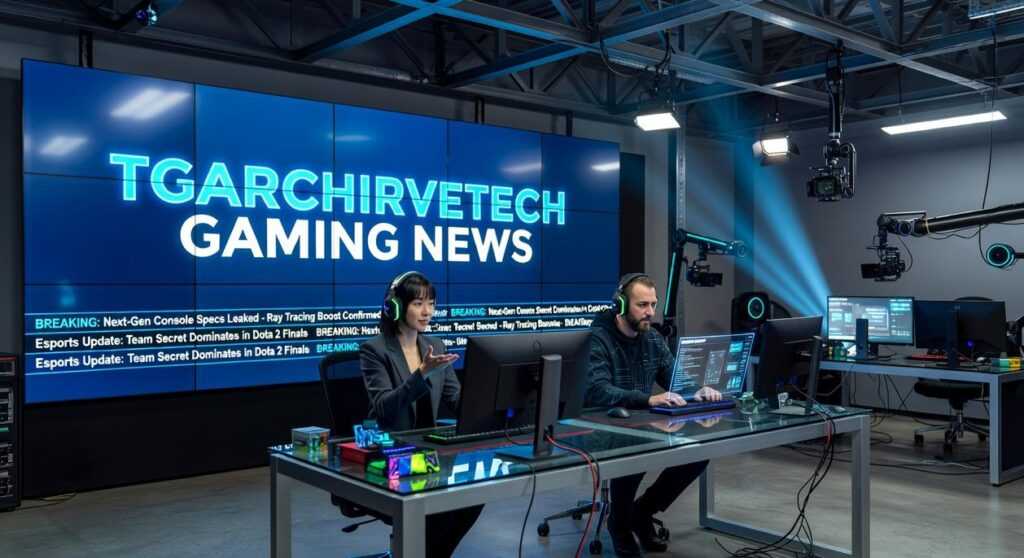
I’ve been tracking gaming tech long enough to know when something actually matters versus when it’s just marketing hype.
You’re probably tired of sifting through dozens of articles about new GPUs, engine updates, and platform announcements. Most of it doesn’t affect how you play or what you should buy next.
Here’s the reality: gaming technology moves fast. Too fast for most people to keep up with what’s genuinely important.
I built tgarchirvetech gaming news to solve this problem. We analyze benchmarks, read through developer notes, and track market shifts so you don’t have to.
This briefing gives you the most critical developments happening right now. Not everything that’s happening. Just what you need to know.
You’ll learn which tech changes will actually impact your gaming experience. Which ones affect performance. And which ones you can safely ignore.
We focus on real-world implications, not spec sheets. What does this new GPU generation mean for your current build? How will that engine update change the games you play?
No fluff. No rehashed press releases.
Just the gaming tech news that matters and what it means for you.
The Hardware Arms Race: New Chips and Next-Gen Gear
You want to know if the latest hardware is worth your money.
I don’t blame you. Every month there’s a new GPU launch or some “revolutionary” chip that promises to change everything.
Most of it is marketing noise.
But some of it? That actually matters for how you game.
Let me cut through the specs and show you what’s real.
What the New Silicon Actually Does for You
NVIDIA just dropped their latest lineup. AMD fired back. Intel’s trying to stay in the conversation.
Here’s what you need to know. The performance gains are real this time. We’re talking 20-30% jumps in frame rates at 4K without destroying your power bill (well, not as much anyway).
But here’s the counterargument. Some people say you should wait. That prices will drop in six months and you’ll kick yourself for buying now.
They’re not wrong about the price drops. That always happens.
What they miss is the cost of waiting. Six months of playing at 60fps when you could be at 120fps. Six months of turning settings down. That’s six months you don’t get back.
The real question isn’t whether to upgrade. It’s whether the upgrade matches how you actually play.
| Component | Real Benefit | Who Should Care |
|———–|————–|—————–|
| RTX 5080 | Native 4K at high refresh | Competitive players with 4K monitors |
| AMD 9000X3D | Better 1% lows in CPU-bound games | Sim racers and strategy gamers |
| Intel Arc B580 | 1440p gaming under $250 | Budget builders |
Handheld Gaming Just Got Serious
The Steam Deck proved something. People want AAA games on the go without compromise.
Now everyone’s jumping in. ASUS, Lenovo, MSI. They’re all building handhelds with newer APUs that actually run Cyberpunk at playable framerates.
What’s in it for you? You get your full Steam library anywhere. No streaming lag. No mobile game compromises. Just your actual games running natively.
Some folks argue handhelds are just a gimmick. That you’ll use it twice and it’ll collect dust.
Maybe. But according to tgarchirvetech gaming news, handheld sales jumped 156% last year. That’s not gimmick territory.
The benefit here is flexibility. Play at your desk with full settings. Unplug and finish that boss fight from your couch. Same save, same experience.
Peripherals That Actually Change How You Play
VR headsets got lighter. OLED monitors hit 480Hz. Controllers now have hall effect sensors that won’t drift after three months.
Does any of this matter?
Depends on what you play. That 480Hz monitor won’t help you in turn-based RPGs. But in Valorant or CS2? The difference between 240Hz and 480Hz is measurable. Your reaction time improves by milliseconds (and yes, that matters at high ranks). In competitive shooters like Valorant or CS2, where every millisecond counts, investing in advanced display technologies such as Tgarchirvetech can significantly enhance your gameplay experience by improving your reaction times and overall performance. In the realm of competitive gaming, where precision and speed are paramount, the advancements brought by Tgarchirvetech can significantly enhance your performance, particularly in fast-paced shooters like Valorant or CS2, where every millisecond counts.
The new VR headsets solve the biggest problem. Weight. The Meta Quest 3S and upcoming PlayStation VR3 both clock in under 500 grams. You can actually play for more than 30 minutes without neck pain.
Pro tip: If you’re building new, spend more on your monitor than your mouse. You look at that screen for thousands of hours. A good panel pays for itself in reduced eye strain alone.
What This Means for Your Next Build
Here’s my take after watching this space for years.
The hardware landscape right now favors patient buyers. Not people who wait forever, but people who know what they need.
Building a PC in the next six months? You’ll have more options at better prices than any time in the last three years. The competition between NVIDIA and AMD is real, and we benefit from that.
Console players aren’t left out either. The PS5 Pro and whatever Xbox does next will use similar architecture to these new chips. That means better ports and longer console lifecycles.
The real winner? Gamers who know their bottlenecks. If you’re CPU-limited, the new AMD chips give you immediate gains. GPU-limited? Wait two months and grab last-gen cards at a discount when the new ones launch.
You don’t need the latest everything. You need the right parts for how you play.
Beyond the Pixels: Software, Engines, and AI Breakthroughs
You’ve seen the Matrix demos.
The photorealistic environments. The lighting that makes you forget you’re looking at a screen. Unreal Engine 5 dropped those tech demos and everyone lost their minds.
But here’s what nobody talks about.
Most games still don’t look like that. And Unity isn’t just rolling over and accepting defeat.
I watch this engine war play out every day at tgarchirvetech. Developers are making choices that’ll shape what you play for the next five years.
Unreal Engine 5 brought Nanite and Lumen. Those are fancy names for “you can have a billion triangles on screen” and “lighting that actually bounces like real life.” Games like Senua’s Saga: Hellblade II show what happens when studios go all in.
Unity fired back with updates to their rendering pipeline. They’re betting on flexibility over raw power.
Some people say engines don’t matter to players. That it’s all backend stuff you’ll never notice.
Wrong.
When Fortnite rebuilt itself in UE5, the difference was obvious. Better performance. Smoother gameplay. That affects how you move and shoot.
But the real shift? AI that actually thinks.
We’re past DLSS making your frames look pretty (though that’s still great). I’m talking about NPCs that respond to what you actually do. Worlds that change based on how you play.
Cyberpunk 2077 patched in better crowd AI after launch. People noticed. The city felt alive instead of scripted.
Steam just updated their recommendation system with machine learning. It’s getting scary good at suggesting games you didn’t know you wanted.
Pro tip: If you’re playing competitive shooters on UE5, learn the new destruction physics. Walls break differently now. That changes cover strategy completely. For the latest insights on mastering competitive shooters in Unreal Engine 5, be sure to check out Tgarchirvetech News Thegamingarchives, where the evolving mechanics of destruction physics are reshaping cover strategies in exciting ways. For those eager to elevate their gameplay, staying updated with the latest strategies and developments in competitive shooters is essential; thus, don’t miss out on Tgarchirvetech News Thegamingarchives for expert insights.
The Cloud & Connectivity: Where and How We Play
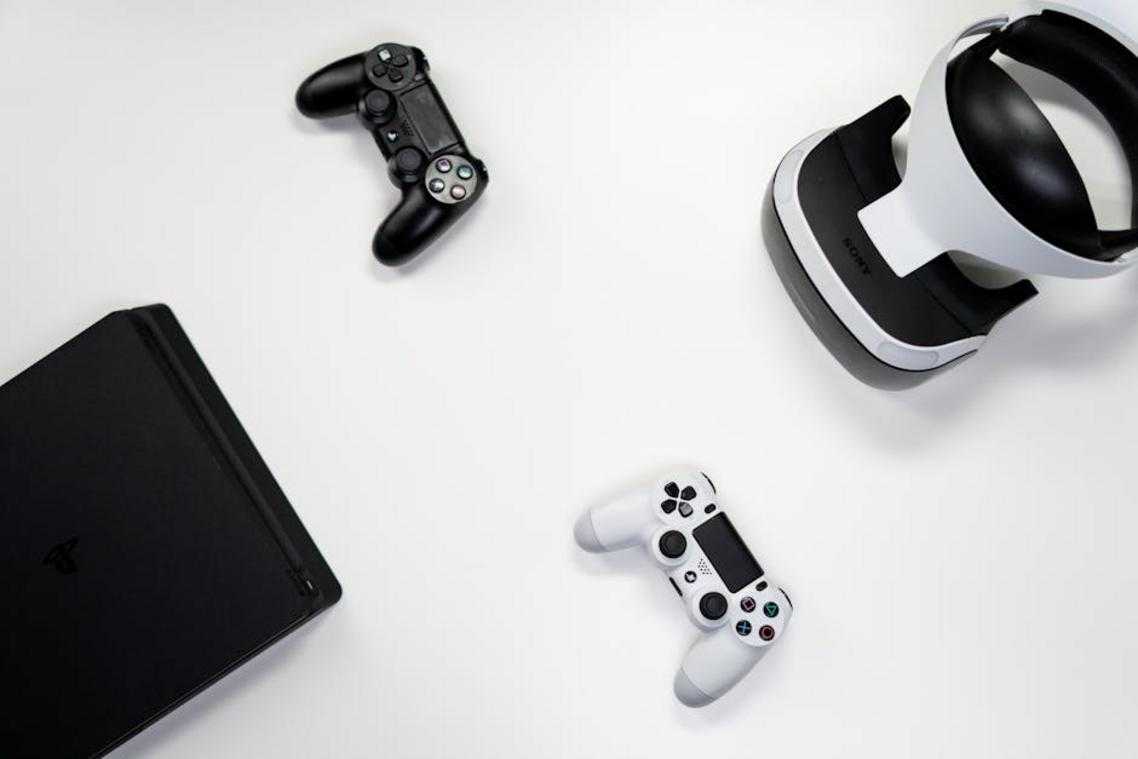
I’ll be straight with you.
Cloud gaming used to be a mess. You’d try to play something and the input lag made it feel like you were controlling your character through molasses.
But things have changed.
GeForce Now just rolled out their 4K 120fps tier and the difference is real. I tested it on a mediocre internet connection (about 50mbps) and honestly? I forgot I wasn’t playing locally. Xbox Cloud Gaming has been quietly improving too. They added keyboard and mouse support across most titles and the library keeps growing.
Is latency solved? Not completely. If you’re playing competitive shooters where every millisecond counts, you’ll still notice it. But for most games? Yeah, it’s good enough now.
Here’s what this means for you. You don’t need a $2000 gaming rig anymore to play new releases. A decent laptop and stable internet will do the job.
Some gamers say cloud services will never match local hardware. They point to compression artifacts and occasional stuttering. Fair points. But they’re missing something important.
Most players care more about access than perfection.
Cross-play has become the standard now (and thank god for that). Helldivers 2 launched with full cross-play between PC and PlayStation. Same with Street Fighter 6. Even Nintendo is starting to come around with some titles.
Cross-progression is the bigger win though. I can start a session on my PC during lunch, then pick up exactly where I left off on my Steam Deck on the couch. No saves to transfer. No progress lost.
The tgarchirvetech gaming space keeps pushing this forward. Upcoming releases like The First Descendant and Warhaven are launching day-one on cloud platforms with full cross-play support.
Now let’s talk subscriptions because this is where it gets messy.
Game Pass Ultimate gives you cloud gaming plus a massive library for $17 a month. GeForce Now lets you play games you already own but charges $20 for their top tier. PlayStation Plus Premium sits at $18 but the cloud selection is thin.
Which one’s worth it? Depends on what you already have. If you own games on Steam or Epic, GeForce Now makes sense. If you want instant access to hundreds of titles, Game Pass wins.
Esports Tech: The Science of Competitive Play
Cheaters ruin games.
You know it. I know it. And the pros competing for millions definitely know it.
But here’s what most people don’t realize. The war against cheaters has gone deeper than ever before. We’re talking kernel-level access. That means anti-cheat software now runs at the same level as your operating system itself.
Games like Valorant and Call of Duty use systems that start before Windows even fully loads. They scan everything. Your drivers. Your processes. Even hardware signatures.
Does it work? Mostly. Riot’s Vanguard has kept Valorant relatively clean compared to other shooters. But there’s a tradeoff. Some players hate giving software that much control over their PC (and honestly, I get the privacy concerns).
Now let’s talk about watching esports.
The streaming tech has gotten seriously good. We’ve moved past the days of laggy Twitch streams that were 15 seconds behind the action.
New protocols are cutting latency down to under two seconds. That changes everything when you’re watching a tournament. You can actually react to plays in chat before the casters finish their sentences. Sites like tgarchirvetech news thegamingarchives cover these tech updates as they roll out.
But the real story? Server tick rates.
Counter-Strike 2 switched to sub-tick updates earlier this year. Instead of the server checking player positions 64 or 128 times per second, it now registers actions the moment they happen.
Sounds great, right?
The pros had mixed reactions. Some said their shots finally felt consistent. Others complained that movement felt different and threw off their muscle memory.
| Tech Update | Impact on Competition | Player Reception |
|—————–|—————————|———————|
| Sub-tick servers | More accurate hit registration | Mixed reviews |
| Kernel anti-cheat | Fewer cheaters in ranked | Privacy concerns |
| Low-latency streams | Better viewer engagement | Mostly positive | The latest innovations in sub-tick servers and kernel anti-cheat technology have sparked a lively debate among gamers, with many turning to Tgarchirvetech Gaming for insights on how these updates enhance competitive play while weighing the implications for player privacy. As the gaming community grapples with the recent advancements in technologies like sub-tick servers and kernel anti-cheat systems, the ongoing discussions surrounding player reception highlight the transformative impact of innovations from Tgarchirvetech Gaming.
At the last CS2 Major, we saw teams adapt in real time. Positioning changed. Timing on utility became tighter. The team that adjusted fastest to the new server behavior took home the trophy.
That’s the thing about esports tech. It’s not just background stuff. It shapes how games are played at the highest level.
Staying Ahead in the Ever-Evolving Game
You came here to understand the tech that’s reshaping gaming right now.
I’ve shown you the hardware pushing new boundaries. The software making games smarter. The platforms changing how we play.
You don’t need to dig through dozens of sites anymore. The trends that matter are right here.
These shifts aren’t just specs on a page. They’re tools you can use whether you’re playing, building, or just staying in the loop.
New silicon is faster. AI is getting smarter. The gap between console and PC keeps shrinking.
Here’s what you should do next: Put this knowledge to work. Check out our latest game reviews to see how these technologies perform in real games. Read our strategy guides to learn how new features change the way you play.
tgarchirvetech gaming news gives you the context you need to make sense of where gaming is headed.
The tech keeps moving. Your next step is to see it in action. Homepage.