
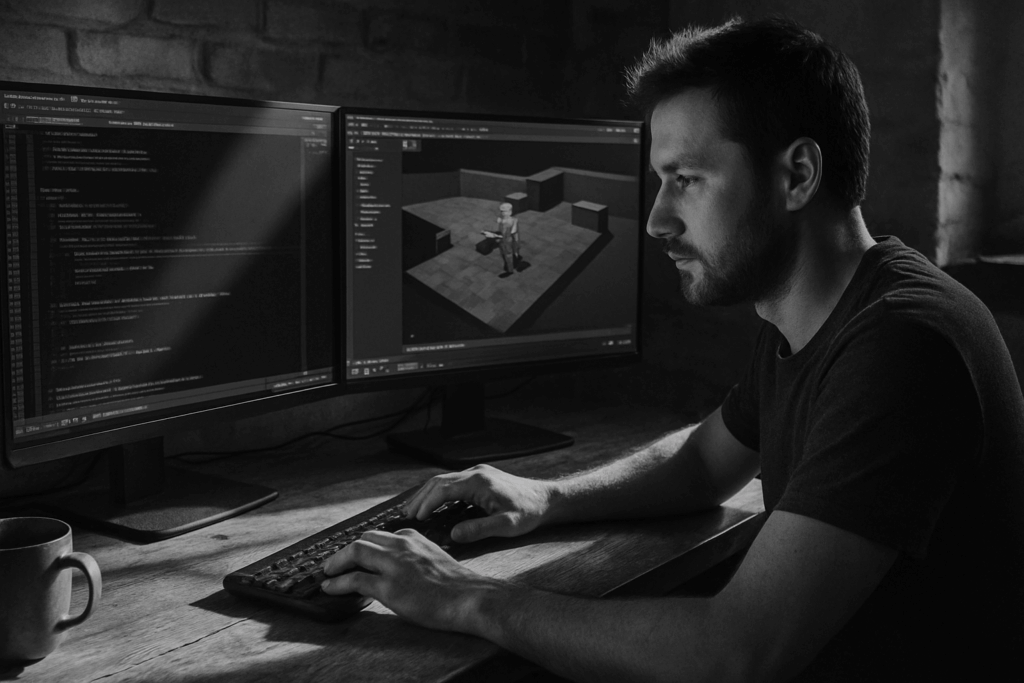
Smarter Game Design from the Ground Up
Artificial intelligence is no longer a back end tool it’s shaping the creative core of modern game design. From dynamic environments to branching storylines, AI is enabling developers to build more complex, responsive worlds with greater efficiency.
Procedural World Building with AI
Game environments used to require countless hours of manual design. Today, AI driven procedural generation allows developers to create vast, diverse worlds in a fraction of the time.
AI algorithms generate topography, terrain variations, and object placement
Tools can adapt environments based on player behavior or design rules
Randomized but logical world layouts keep gameplay fresh and replayable
Machine Learning in Level Creation
Machine learning models can digest vast amounts of gameplay data to aid in smarter level design. As a result, development teams are saving time and improving quality.
Algorithms analyze player movement and engagement across levels
Identify which design elements encourage exploration or cause frustration
Devs can rapidly prototype levels with AI generated recommendations
Result: Fewer iterations, shorter development cycles, and better informed design decisions.
Dynamic and Adaptive Narratives
Gone are the days of static, pre scripted storylines. AI now enables game narratives to branch dynamically based on a player’s actions, creating richer, more personalized storytelling.
AI tracks choices and tailors dialogue, side quests, and game endings
Characters can respond contextually, increasing emotional stakes
Enables massive narrative complexity without overwhelming writers or devs
Big Picture: AI in storytelling isn’t just about complexity it’s about delivering meaningful player agency within a coherent narrative framework.
Streamlining the Asset Pipeline
Game development has always been a grind, especially when it comes to production heavy assets like animations and environments. Now, AI is punching holes in those old time bottlenecks. Character animation, once a laborious task full of frame by frame tweaks, is now being handled by machine learning models that understand natural motion. Devs are feeding in mocap data or even basic rigs, and getting realistic animation sequences minutes later.
Environmental modeling is seeing a similar jump. AI tools can generate sprawling, textured environments with just a few input parameters think terrain, lighting mood, architectural style and iterate in real time. Paired with procedural generation, it’s giving teams the ability to explore broad creative directions without redlining their budgets or burning out artists.
Deep learning also has its hands in textures and physics. Want water that ripples the right way, or concrete that fractures believably under pressure? AI’s on it. These tools analyze massive datasets to simulate natural textures and behavior, saving hours of manual tuning.
Bottom line: faster asset prototyping means developers get to move quicker through trial and error and spend more effort on making the game feel right not just look right.
Revolutionizing NPC Behavior
Say goodbye to cardboard cutout NPCs. AI is stepping up the game and the characters in it. In 2024, we’re seeing more non playable characters deliver unscripted, adaptive responses that respond to context, emotion, and player input. They don’t just follow a script; they react, learn, and surprise you.
Enemies are evolving too. Smarter AI means they can track patterns in your playstyle, learn from your tactics, and adjust on the fly. That brute you thought you could outmaneuver every round? Next time, he’s ready for you. The line between scripted behavior and real intelligence is starting to blur.
Allies are getting an upgrade as well. AI companions now offer more than just combat support they react to in game events, make strategic choices, and even initiate mission dialogue based on what you’ve done, not just what the devs assumed you would.
This shift is making games less predictable and way more immersive. Every playthrough is unique, and every decision can spiral into a new experience. It’s not just code following orders it’s code making choices.
Testing and Debugging at Scale

Debugging used to be a grind. Long hours, tired QA teams, and endless controller mashing to track down the right combo that broke the game. But now, AI bots are taking the wheel literally. Developers are training these systems to simulate thousands of gameplay scenarios, stress testing everything from enemy AI to level geometry in ways no human team could match.
The result? Bugs surface faster. Balancing issues stand out early. Exploits that once slipped through the cracks are caught before launch. It’s not magic it’s brute force iteration powered by machine learning. These bots can run 24/7, hammering away at every choice, collision, or combat system until something breaks. And when it does, the system flags it, localizes it, and sometimes even suggests a fix.
It’s not about replacing QA teams. It’s about scaling them. Letting humans focus on the edge cases, the play feel details, the polish that bots don’t understand. With AI handling the bulk work, studios waste less time squashing obvious bugs and spend more time making games fun. Cutting corners isn’t the play here cutting bottlenecks is.
AI in Audio and Localization
AI is making serious strides in one of game development’s most nuanced areas: audio and localization. From synthesized dialogue to culturally adaptive localization strategies, developers are finding new ways to sound more authentic faster and for less money.
Real Time Voice Generation
Synthesized, AI generated voices are no longer robotic or flat. Modern tools can now deliver real time voiceovers with emotion, tonal variation, and character specific nuance.
AI voice models can mimic various tones, accents, and personalities
Saves hours of recording sessions and actor scheduling
Easily adapt dialogue during development without reshoots
This technology is especially helpful during rapid iteration phases, giving teams the flexibility to test different character voices or scripts without full re records.
Smarter, Context Aware Localization
Localization goes beyond direct translation. Modern players expect dialogue and UI to make sense culturally, emotionally, and contextually.
AI models trained for contextual understanding can detect slang, idioms, or cultural references
Translations adapt tone based on region, not just language
Helps deliver more immersive narratives across global markets
By simplifying localization and reducing rework, AI enables developers to ship globally without delays or miscommunication.
Striking the Cost vs. Quality Balance
One of AI’s biggest game changers in audio and localization is efficiency without major sacrifices.
Reduces reliance on expensive re recording processes
Automates routine localization tasks, freeing teams for creative adjustments
Helps indie and mid sized studios reach wider audiences with tighter budgets
The result? Games that sound right in every language and every region without breaking the bank.
How Studios Are Investing in AI
The rise of artificial intelligence isn’t just affecting gameplay mechanics it’s reshaping how game studios operate behind the scenes. From AAA titles to indie gems, studios of all sizes are incorporating AI into the development process to drive innovation, boost efficiency, and stay competitive in a fast moving industry.
Big Studios, Bigger Investments
Top tier developers are making long term bets on AI by building dedicated research and development teams:
Forming in house AI labs to explore custom tools
Developing proprietary machine learning solutions for content generation and optimization
Collaborating with academic institutions for breakthroughs in AI driven design and production
These investments signal a shift in priorities: data science and AI engineering are quickly becoming core disciplines within large studios.
The Democratization of AI for Smaller Teams
While big names make headlines, mid size studios and even solo indie developers aren’t getting left behind. Thanks to more accessible tools and platforms, AI is becoming a reality for creators across the board.
Off the shelf AI tools for asset generation, animation, and dialogue writing
Cloud based platforms offering AI as a service for task automation
Low code and no code AI solutions narrowing the technical gap
This democratization is helping smaller teams compete at levels that were once out of reach without large budgets.
Part of a Larger Industry Shift
The integration of AI also intersects with broader gaming industry trends most notably, studio consolidation.
Mergers and acquisitions are enabling resource sharing around proprietary AI systems
Larger entities are pooling talent across merged teams to scale AI more efficiently
Smaller studios acquired by bigger publishers often gain access to in house AI infrastructure
Learn more about this evolving landscape in our deeper dive: Biggest Gaming Mergers and Acquisitions in the Past Year
What to Watch in 2026 and Beyond
Balancing Innovation and Integrity
As AI tools integrate deeper into game development, questions around ethics and creative control are becoming impossible to ignore. While automation offers speed and scalability, it also raises fundamental concerns about authenticity and the erosion of human creativity.
Ethical Concerns Around Over Automation
Loss of artistic voice: When too much is delegated to algorithms, studios risk losing the distinct style and emotional depth that comes from human led design.
Player trust: Gamers increasingly value originality. Overuse of AI generated content may feel hollow or repetitive, damaging long term engagement.
Workforce displacement: Automating creative and technical roles creates fear of job loss among developers from writers to artists to QA testers.
The Future of AI Generated Creativity
AI can support creativity, but it shouldn’t replace it. As tools grow more powerful, studios need to define clear boundaries for where machine input ends and human vision begins.
AI as a co creator: Used wisely, AI can accelerate ideation, reduce busywork, and unlock new forms of interactive storytelling.
Blending craft with computation: The best outputs will come from teams that merge technical proficiency with human insight.
Risks of homogeneity: Without oversight, AI generated assets may rely on learned trends, creating derivative or predictable experiences.
Tips for Devs: Keeping the Soul of Your Game
Maintaining the “human touch” isn’t just a philosophical choice it’s a strategic one for creating lasting impact and player loyalty.
Use AI to enhance, not replace: Let automation handle repetitive tasks, so your team can focus on creative decisions that define the game.
Test player perception: Regularly audit game content to ensure it aligns with your studio’s tone and emotional goals.
Emphasize collaboration: Embed AI as part of your toolset, not your creative director. Designers, writers, and engineers should guide AI, not vice versa.
Promote transparency: Let players know how AI was used (and why). Transparency helps build authenticity and trust.
In short, the future of AI in gaming isn’t about removing the human element it’s about giving creatives new tools to express it more powerfully.
 Steven Whitesiderston is the kind of writer who genuinely cannot publish something without checking it twice. Maybe three times. They came to gaming news and updates through years of hands-on work rather than theory, which means the things they writes about — Gaming News and Updates, Player Strategy Guides, Game Reviews and Critiques, among other areas — are things they has actually tested, questioned, and revised opinions on more than once.
That shows in the work. Steven's pieces tend to go a level deeper than most. Not in a way that becomes unreadable, but in a way that makes you realize you'd been missing something important. They has a habit of finding the detail that everybody else glosses over and making it the center of the story — which sounds simple, but takes a rare combination of curiosity and patience to pull off consistently. The writing never feels rushed. It feels like someone who sat with the subject long enough to actually understand it.
Outside of specific topics, what Steven cares about most is whether the reader walks away with something useful. Not impressed. Not entertained. Useful. That's a harder bar to clear than it sounds, and they clears it more often than not — which is why readers tend to remember Steven's articles long after they've forgotten the headline.
Steven Whitesiderston is the kind of writer who genuinely cannot publish something without checking it twice. Maybe three times. They came to gaming news and updates through years of hands-on work rather than theory, which means the things they writes about — Gaming News and Updates, Player Strategy Guides, Game Reviews and Critiques, among other areas — are things they has actually tested, questioned, and revised opinions on more than once.
That shows in the work. Steven's pieces tend to go a level deeper than most. Not in a way that becomes unreadable, but in a way that makes you realize you'd been missing something important. They has a habit of finding the detail that everybody else glosses over and making it the center of the story — which sounds simple, but takes a rare combination of curiosity and patience to pull off consistently. The writing never feels rushed. It feels like someone who sat with the subject long enough to actually understand it.
Outside of specific topics, what Steven cares about most is whether the reader walks away with something useful. Not impressed. Not entertained. Useful. That's a harder bar to clear than it sounds, and they clears it more often than not — which is why readers tend to remember Steven's articles long after they've forgotten the headline.